Built in 1973, Kauffman Stadium is the sixth oldest active MLB venue and long stood as one of the most difficult parks in baseball for home runs. That identity changes in 2026.
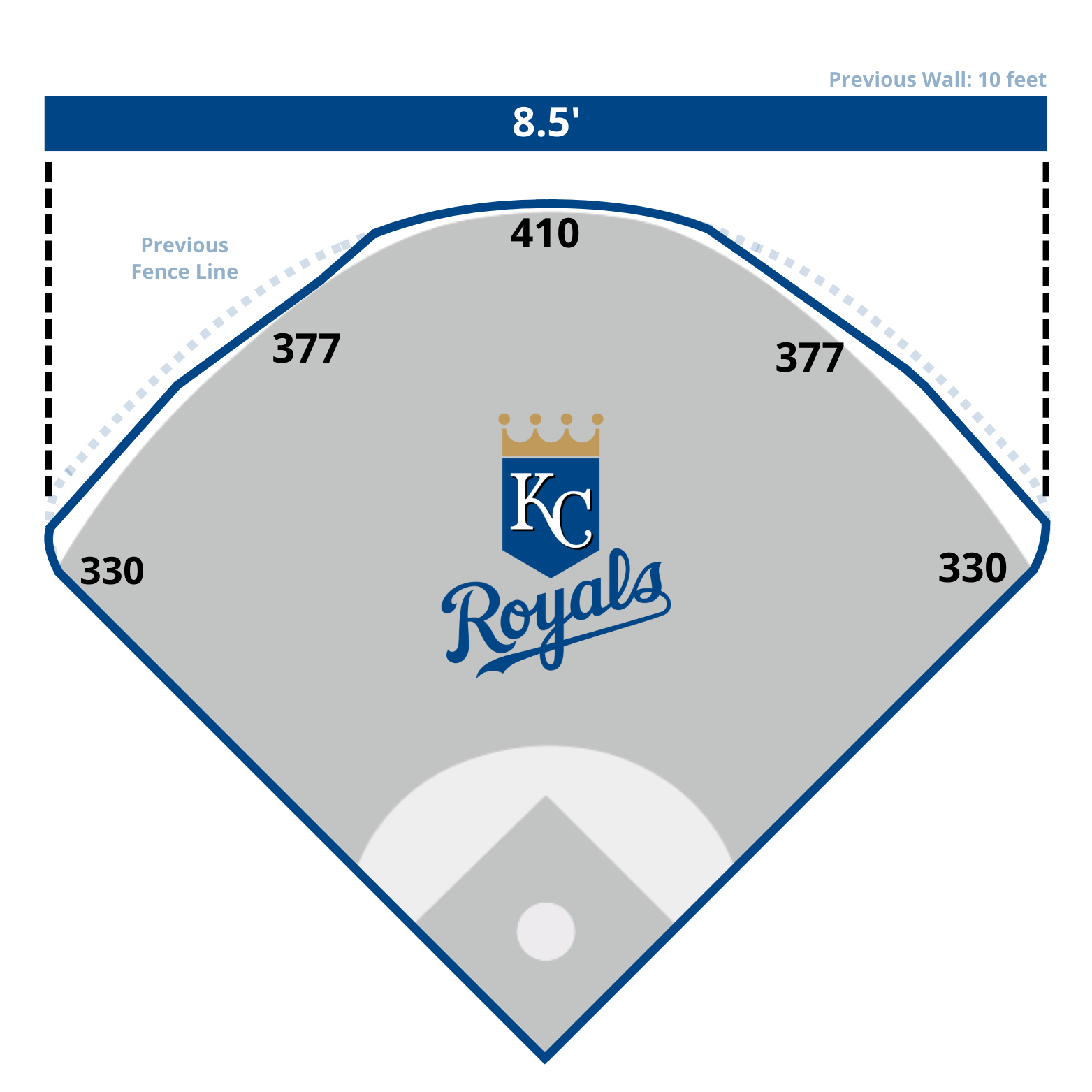
Prior to this season, Kauffman routinely ranked near the bottom of MLB in home run production. However, the Royals moved the left and right field fences in by roughly nine to ten feet, with the changes beginning near the foul poles and tapering toward center field. The 410-foot straight-away center field distance remains unchanged, but the outfield wall height has been reduced from 10 feet to 8.5 feet in most locations. The result is a dramatically different power environment.
Ballpark Pal now projects Kauffman Stadium to be 10% more homer-friendly than league average, ranking 6th in MLB for home runs. Overall run scoring is projected to be 7% above average, also ranking 6th in MLB, as additional home runs supplement what was already a healthy run environment.
Even before the fence adjustments, Kauffman was not a pure pitchers park. Its enormous outfield, ranked 2nd largest in MLB, historically encouraged balls in play and allowed hitters to string together contact. That effect now plays closer to neutral. The park ranks 14th for singles and 12th for doubles and triples, no longer the extreme hit-inflating venue it once was.
One constant is contact. Kauffman ranks 29th in strikeouts, meaning it remains one of the most contact-friendly environments in the league. The combination of high contact and a newly shortened power alley creates a far more dangerous overall offensive setting than in previous seasons.
Fly balls continue to carry well in Kansas City. Typical carry distance grades +0.23% above league average (3rd in MLB). That modest but meaningful boost is helped by the park's 750-foot altitude (5th highest in MLB) and warm conditions. Average start-time temperature sits at 78.5 degrees (8th warmest), with 30% of games played in 80-degree weather or hotter.
Wind remains a noticeable factor. Average wind speed is 9.5 mph, and it blows out 48% of the time compared to 31% blowing in. The dominant directional pattern includes 27% out to left field. Overall wind receptiveness ranks in the middle tier, and the park sits 11th in day-to-day variation.
The 2026 configuration represents one of the most significant single-season park identity shifts in recent MLB history.